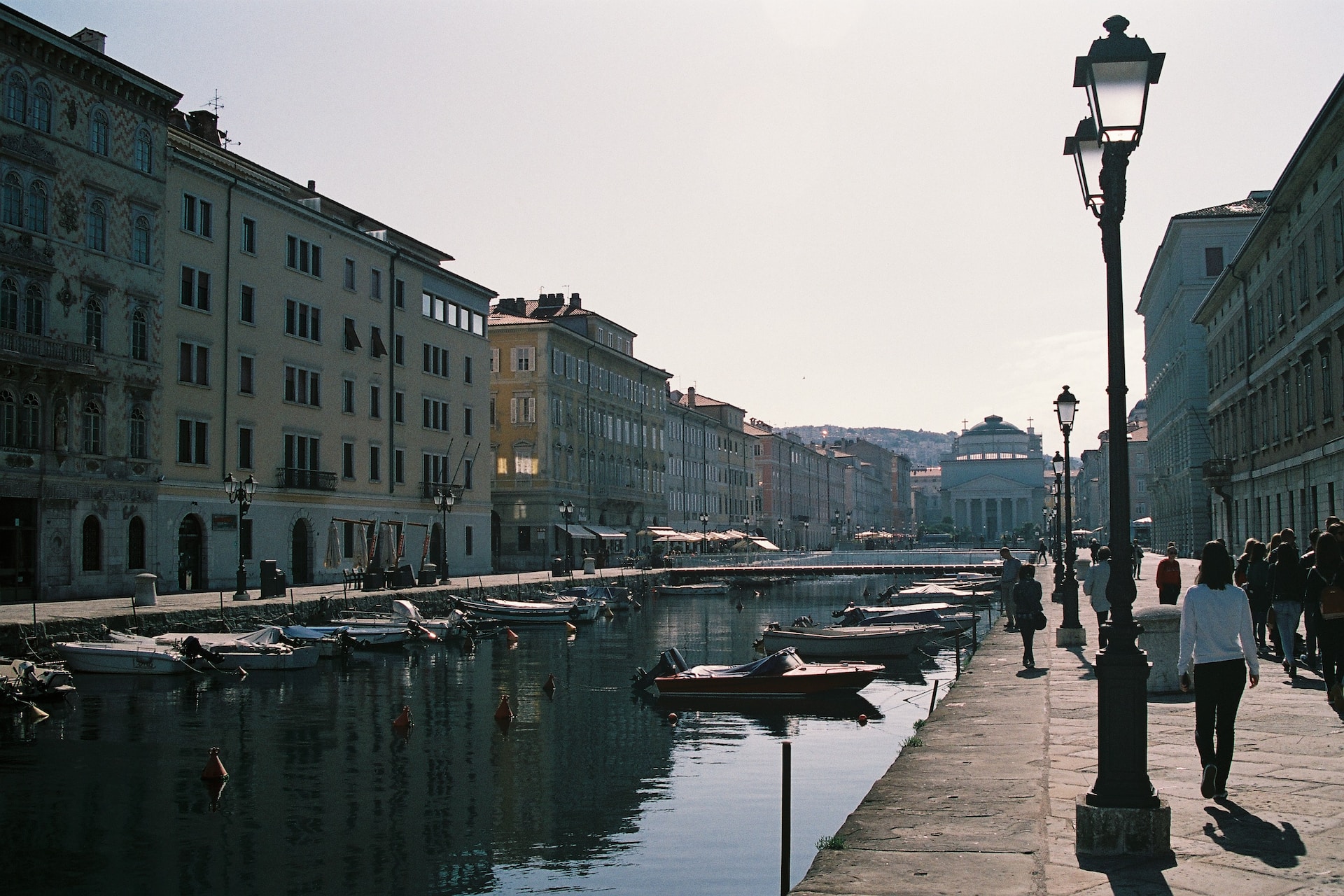
Trieste, Italy
In Italy, the SUPERSHINE pilot site was identified in the ATER social housing complex in Via Boito, Trieste. The district consists of eight residential buildings, each with four stories and 16 dwellings, for a total of 128 housing units and an overall floor area of 4,417 m². Before the intervention, the buildings were affected by significant structural, functional, and technological obsolescence, with high energy consumption for space heating (approximately 131 kWh/m² per year).
Building on the experience of the SUPER-i project, SUPERSHINE supported ATER Trieste in defining a comprehensive demolition and reconstruction strategy for the Via Boito complex. The intervention aims to overcome the deterioration of the existing buildings and replace them with a new, energy-efficient, and socially inclusive district.
The redevelopment of Via Boito focuses on innovative technological and residential solutions, combining high energy performance, environmental protection, and improved liveability of both private and shared spaces. Particular attention has been paid to the quality and usability of outdoor areas and common indoor spaces, ensuring they actively contribute to residents’ wellbeing and social interaction.
A key innovative element of the intervention is the early involvement of the local community, which preceded the actual design phase. Through participatory and co-design activities, SUPERSHINE collected ideas, expectations, and everyday needs from residents and local stakeholders. This process made it possible to better understand how both external spaces and shared indoor areas are used, as well as which services are most needed within the neighbourhood. The outcomes of this engagement directly informed the design choices, ensuring that the redevelopment responds to real needs and fosters long-term ownership.
Trieste – Via Boito pilot visit
We visited the Via Boito pilot site to explore the neighbourhood and document its regeneration process.
During our visit, we interviewed Cristina Davi (Head of Staff Area, ATER Trieste), Alessandra Cechet (Architect, Head of Construction Department, ATER Trieste), Nadia Vedova (Participatory Design Expert, Kallipolis Association), Antonella Trobez (local business owner), and Mario Sorz (longtime resident).
In the videos, they share their perspectives on the transformation of Via Boito and the future of public housing in Trieste.
Financial Graphs

This figure shows that the shared savings model is financially strongest in Boito when all renovation measures are implemented together. The combined package delivers a return on investment of 12.94% for affordable housing and 12.70% for the ESCO, both clearly above the 6.11% benchmark. Among the individual measures, wall renovation again performs best, reaching 10.12% for affordable housing and 10.69% for the ESCO. Roof and floor measures provide moderate returns, while windows are the least attractive standalone option, generating only 2.26% for affordable housing and 4.14% for the ESCO. The figure therefore underlines that in the Italian case, a full-package strategy creates the most robust investment outcome.
Energy Poverty Graphs

This chart shows that the full energy renovation package in Boito can deliver €595.06 in annual savings per dwelling. As with Riga, wall insulation is the largest contributor, accounting for €277.03 per dwelling each year. Roof and floor measures provide similar levels of savings, at €133.22 and €131.49 respectively, while window upgrades contribute a more limited €53.31. The figure shows that savings are distributed across several measures, but the greatest value comes when they are implemented together as a coordinated package.

This figure shows that renovation substantially reduces the share of household income spent on energy in the Italian case. Before renovation, energy expenditure accounts for 42.19% of income, while after renovation it falls to 17.05%. This is a very significant improvement, cutting the energy burden by roughly 60%. The chart demonstrates how energy efficiency investment can improve affordability and help protect residents from high energy costs.

This chart shows a very large reduction in building energy consumption after renovation in Boito. Energy use falls from 1,086.02 kWh/sqm before renovation to 373.38 kWh/sqm after renovation. This indicates a major improvement in the building’s thermal performance and overall efficiency. The result supports both the environmental and social case for renovation, as lower energy demand means lower emissions and lower running costs for households.

This figure highlights one of the strongest social benefits observed across the lighthouse cases. Before renovation, 59.88% of residents were unable to maintain adequate comfort in their homes during hot and cold seasons. After renovation, this drops sharply to 20.67%. The chart shows that the renovation has the potential to transform indoor living conditions for a large share of residents, reducing discomfort and vulnerability linked to poor housing performance.
Lighthouses
Lighthouse districts are in three cities: Trieste (Italy), Herning (Denmark) and Riga (Latvia).