Herning (Denmark)
The SUPERSHINE Danish lighthouse district is located in Holtbjerg, Herning Municipality, within a highly efficient renewable district heating system supplied by the biomass CHP plant Herningværket (78 MW electric / 200 MW thermal), serving around 48,000 households through the cooperative utility Verdo. The district includes schools, shops, single-family homes, and apartment blocks and is characterised by social vulnerability, making it an ideal site to test inclusive, energy-efficient renovation strategies.
A standout initiative is the 50 m² orangery built entirely from recycled materials, part of the “Green and Blue Oasis at Holtbjerg”. The orangery, constructed with concrete from dismantled balconies and repurposed windows, provides residents with a communal space for relaxation and social activities while demonstrating circular construction practices. Around 18 tonnes of materials were reused, saving an estimated 17 tonnes of CO₂.
The oasis also features beehives, raised beds, fruit groves, insect hotels, and shared outdoor spaces, improving biodiversity, comfort, and neighbourhood quality.
Community engagement was central to the project. Residents and students from VIA University College and Herningsholm Erhvervsskole and Gymnasium actively participated in design and construction, fostering skills development, collaboration, and resource awareness.
Through energy-efficient renovation, circular construction, and community-led regeneration, the Herning lighthouse demonstrates how social housing districts can become sustainable, inclusive, and resilient, enhancing quality of life and empowering residents.

Financial Graphs

This figure shows that the Danish Faellesbo case also performs best when all interventions are delivered together. The full package generates a return on investment of 12.39% for affordable housing and 13.78% for the ESCO, both well above the 6.11% benchmark. For standalone measures, walls provide the strongest result for both actors, with 9.25% for affordable housing and 12.02% for the ESCO. Roof and floor interventions also perform well, especially for the ESCO, while windows are again the weakest single measure, at 3.38% for affordable housing and 7.12% for the ESCO. The overall message is that bundling measures improves financial viability and creates stronger returns for all parties.
Energy Poverty Graphs
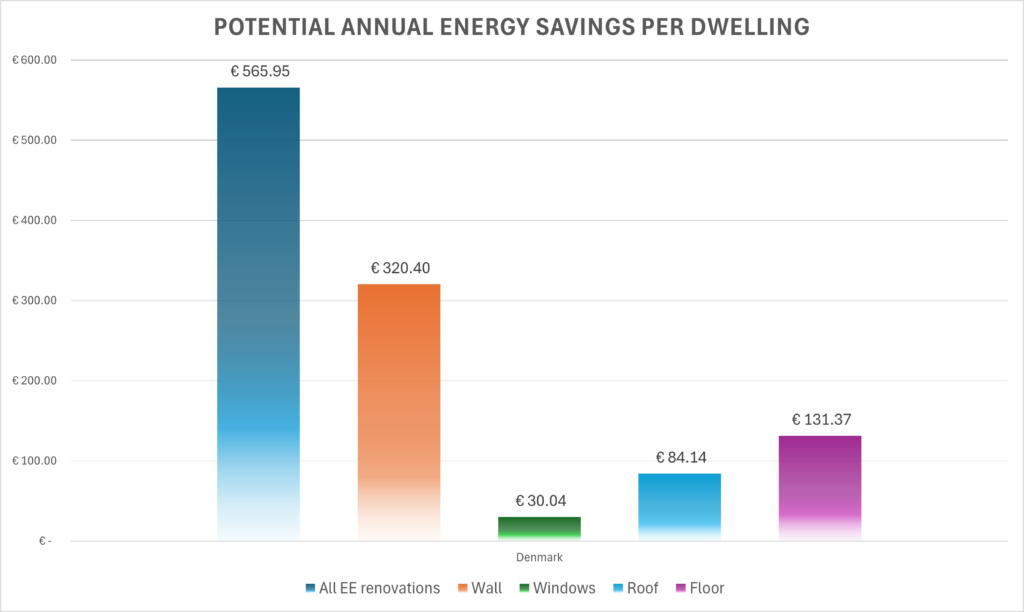
This chart shows that the full renovation package in Faellesbo can save €565.95 per dwelling per year. Wall insulation provides the largest single contribution at €320.40, while floor improvements generate €131.37 and roof measures add €84.14. Window upgrades provide the smallest saving, at €30.04 per dwelling per year. The figure shows that although each measure contributes, the full package gives the greatest financial benefit to residents and the housing system as a whole.
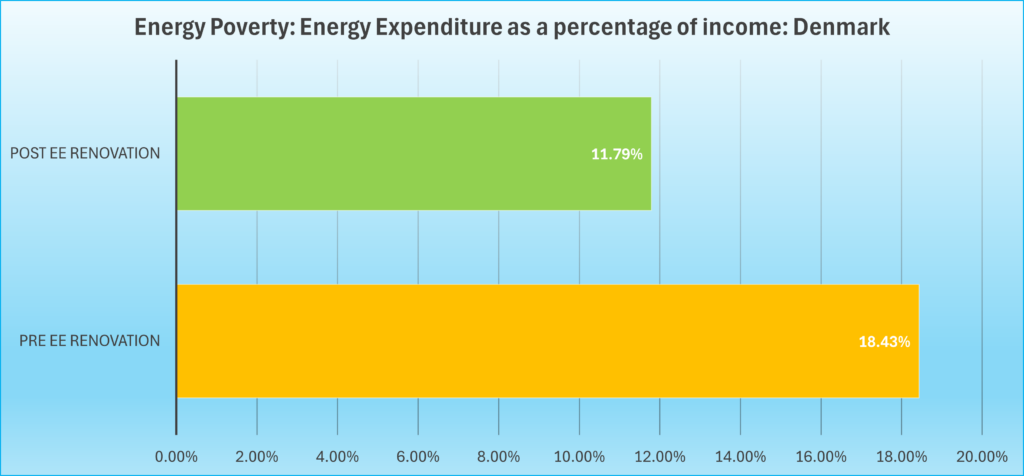
This figure shows that the Danish case starts from a lower level of energy poverty than Latvia and Italy, but still records a clear improvement after renovation. The share of income spent on energy falls from 18.43% before renovation to 11.79% after renovation. While the reduction is less dramatic than in the other lighthouse cases, it still represents an important affordability gain and shows that renovation can reduce household vulnerability even in a comparatively stronger starting position.
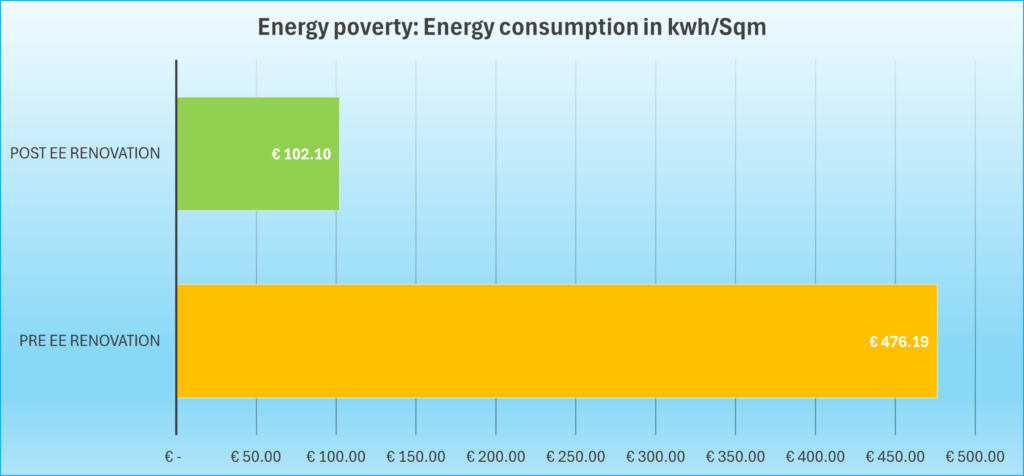
This chart shows the strongest relative reduction in energy consumption intensity among the three cases. Energy use falls from 476.19 kWh/sqm before renovation to 102.10 kWh/sqm after renovation. This indicates a very substantial improvement in building efficiency and suggests that the renovation package is highly effective in reducing heating demand and overall energy use. The figure provides strong evidence of the technical performance of the Faellesbo renovation.

This figure shows that renovation also improves household comfort in the Danish case. Before the works, 27.13% of residents were unable to keep their homes adequately comfortable across the seasons. After renovation, this falls to 15.16%. Although the starting point is better than in Latvia and Italy, the chart still shows a meaningful improvement in comfort and well-being, confirming that energy renovation brings clear social as well as technical benefits.
Lighthouses
Lighthouse districts are in three cities: Trieste (Italy), Herning (Denmark) and Riga (Latvia).